
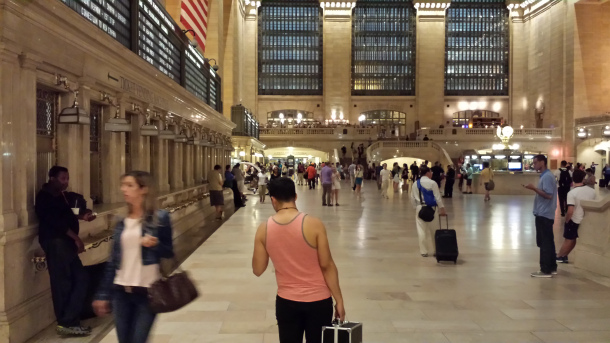
Most Americans did not own cars in the early 20th century. There were no trucks, there were no planes. Instead of taking the highway or heading to the airport, people went to the train station. Indeed, railroad transportation was essentially the only convenient way to get around. Intercity passenger railroads were profitable. Commuter lines were profitable. Privately-owned street cars were built alongside new real estate developments instead of parking lots. Suburbs were connected by rail lines and trolley lines. Even New York’s IRT, BMT, and IND subway companies were somewhat profitable until the Great Depression. There was not yet Amtrak, not yet the MTA, and not yet Conrail. No doubt, at times the government would help with generous bonds, land, subsidies, and PPP contracts, but in general, there was a lot less aid being given to public transportation. With less dependency came more capacity-building creativity and an incentive to actually be efficient. After all, as Curitiba’s BRT founder, Jaime Lerner said, “creativity starts when you cut a zero from your budget“. We should listen to this man, because he invented BRT in Curitiba, Brazil.
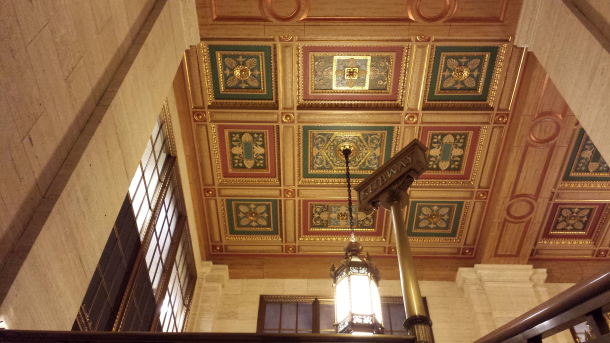
Subway entrance built into commercial space in Manhattan!
So what did these railroad companies do to increase revenue and to be economically sustainable? They built transportation hubs — not only for intermodal connections, but for commercial space. Indeed, railroad companies actually owned profitable real estate with shops and offices. And very few still do, because most passenger railroads are bankrupt and extinct, and their hubs went with them.
However, there’s the famously profitable MTR subway in Hong Kong, which is privatized (with government shareholdings) and which seeks profit in a dense city without suburbs and without the history of suburbanization and rapid transit decay. From The Atlantic:
Because it’s an independent corporation with the government serving as majority shareholder (rather than a public agency, ministry, or authority), the MTR has the freedom to develop real estate, to hire and fire who it will, and to take business-minded decisions—whereas other transit systems, including the one in New York, must deal with union contracts and legal restrictions.
But the MTR is also profitable because of its transportation hubs! The MTR actually developed this supertall skyscraper above its station, and they also own this mall above another station. Their “MetroCards” can actually be used to buy items in these shopping centers! Indeed, also from The Atlantic:
Like no other system in the world, the MTR understands the monetary value of urban density—in other words, what economists call “agglomeration.” Hong Kong is one of the world’s densest cities, and businesses depend on the metro to ferry customers from one side of the territory to another. As a result, the MTR strikes a bargain with shop owners: In exchange for transporting customers, the transit agency receives a cut of the mall’s profit, signs a co-ownership agreement, or accepts a percentage of property development fees. In many cases, the MTR owns the entire mall itself. The Hong Kong metro essentially functions as part of a vertically integrated business that, through a “rail plus property” model, controls both the means of transit and the places passengers visit upon departure. Two of the tallest skyscrapers in Hong Kong are MTR properties, as are many of the offices, malls, and residences next to every transit station (some of which even have direct underground connections to the train). Not to mention, all of the retail within subway stations, which themselves double as large shopping complexes, is leased from MTR. In addition to Hong Kong, the MTR Corporation runs individual subway lines in Beijing, Hangzhou, and Shenzhen in China, two lines in the London Underground, and the entire Melbourne and Stockholm systems. And in Hong Kong, the trains provide services unseen in many other systems around the world: stations have public computers, wheelchair and stroller accessibility (and the space within the train to store them), glass doors blocking the tracks, interoperable touch-and-go fare payment (which also works as a debit card in local retail), clear and sensible signage, and, on longer-distance subways, first-class cars for people who are willing to pay extra for a little leg space.
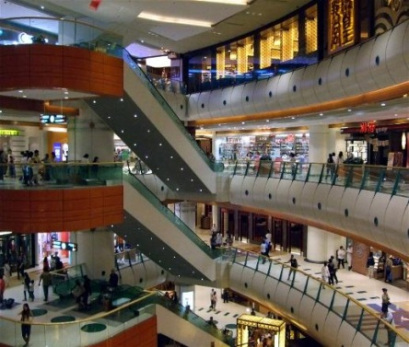
PHOTO CITED: Maritime Square (developed by MTR Corporation)
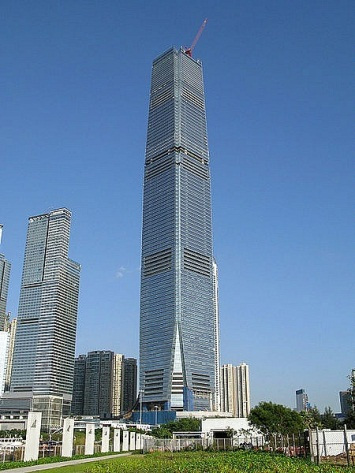
PHOTO CITED: International Commerce Centre (developed by MTR Corporation)
No wonder CEO Jay Walder left the MTA to work for the MTR, until stepping down from the MTR a few years later.
But the MTA — as well as the Port Authority — have their own transportation hubs, as well. The former World Trade Center, after all, was built by the Port Authority, complete with shopping space and a PATH terminal. While the WTC historically struggled with profitability (and asbestos) until being taken over by Larry Silverstein a few months before 9/11, it nonetheless continues to be an example of transit-oriented development. The Port Authority is a public authority that cannot seek outside funding, so it relies on its tolls, port fees, and real estate. Nevertheless, it’s in quite a financial burden, considering it’s building the most expensive station in the world, which happens to be on the site of a previous transportation hub: the Hudson Terminal. This was the former commercial hub for the railroad that operated what became the PATH, and the Hudson Terminal’s twin towers were arguably the predecessor towers for the original WTC.
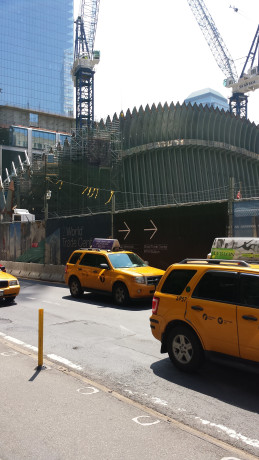
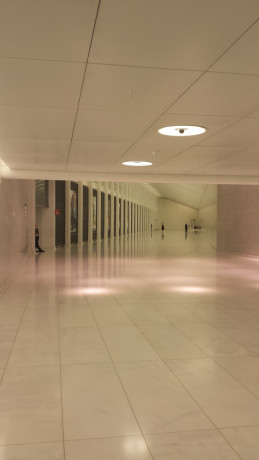
Calatrava’s hub and part of the new PATH terminal…
Calatrava’s project is right next to another huge project: the Fulton Center. The MTA’s Fulton Center may make sense from below ground, as it is fixing up the mazes of connections between former IRT, BMT, and IND A/B Division lines. But from above, it makes absolutely no sense. It looks great, but it’s only a few stories tall, and it’s in Lower Manhattan! It’s definitely too low for Lower Manhattan…
While the MTA has been trying to capture maximum value from real estate, the Fulton Center doesn’t seem to be doing that. They should have allowed for a developer to build something on top of their Fulton Center, but they didn’t because they simply did not consider the possibility. They wanted a transportation facility and nothing else, so they used eminent domain to demolish a set of small buildings controversially and replace them with a small building and the refurbished Corbin Building. The MTA does not have an incentive to think about its finances, because it’ll just get more money from the state, no matter what.
The MTA has been selling air rights elsewhere, such as for the Atlantic Yards and the Hudson Yards. Why couldn’t they think long-term for the Fulton Center? It’s not necessarily a problem that the Fulton Center is expensive; it’s a problem that they aren’t capitalizing upon their assets. It’s clear that they decided to build a beautiful building that will shine light down into the subway instead of a beautiful building that shines onto the skyline of Lower Manhattan. And while there’s a few stories of commercial space, it’s arguably not enough… Plus, maybe they could have provided sunlight while also building towards the sky by using “receiver[s] on the outside, cables that transport the light through the property, and luminaries that spread the light inside”! Hopefully, at least they’ll sell air rights…
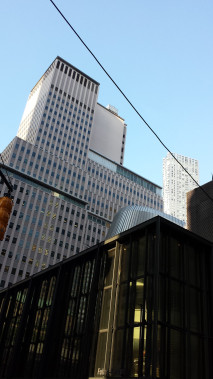
Empty space above Fulton Center!
And the Fulton Center is not alone. In fact, the MTA has a poor “track” record for many of its projects. They actually do not seem to understand the point of a transportation hub; they’re even destroying former hubs NOW!
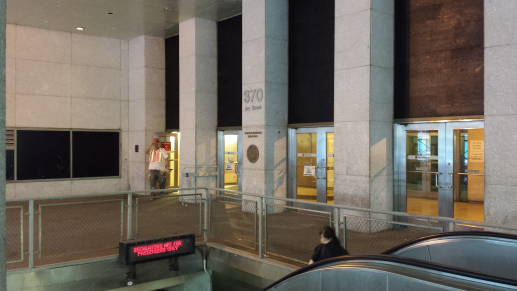
370 Jay Street, IND Jay Street - MetroTech Station, and abandoned NYCT offices…
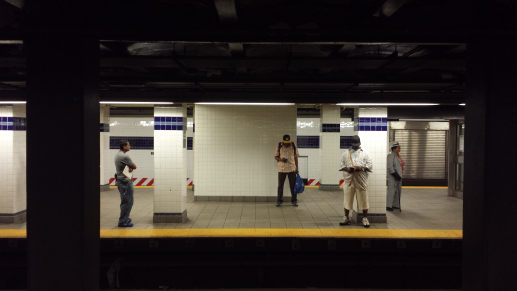
Jay Street Station (and unused gate for money train, on right, into 370 Jay Street)
Jay Street Station is directly connected to former NYCT offices at 370 Jay Street, which were leased to the MTA for $1.00 a year by the City. Now the MTA is paying a lot of money to move to 2 Broadway at Bowling Green, and they’re also paying a lot of money for armored trucks and diesel fuel, when they used to have a way to use their own system to collect revenue through this existing transportation hub in Downtown Brooklyn. They used their old trains running on their tracks with their energy supply connected to their hub and their office space. Now, they use trucks that clog the roads with congestion and pollution. And they’re spending a lot of money moving into Lower Manhattan, when they could have used that money to simply renovate 370 Jay Street. It’s even more confusing when one realizes that 2 Broadway is only a few blocks away from the Fulton Center. The MTA could have built their “stub of a hub” further towards the sky, so as to actually own (and not lease) office space! They could all be working above the Fulton Center, on their own property! Their actions make absolutely no sense.
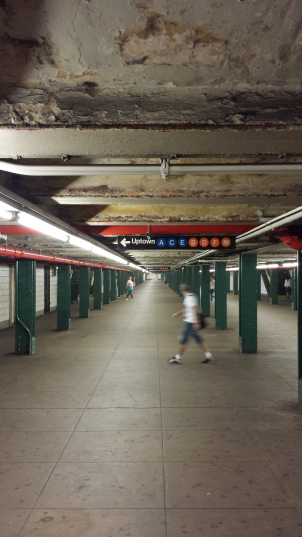
Potential retail space in West 4th Street Station?
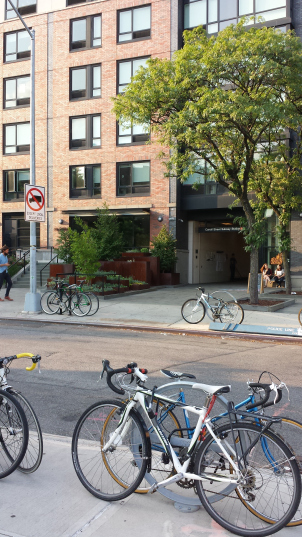
Condos above PPP Carroll Street (F/G) entrance
But what are NYC’s other (remaining) transportation hubs today? Penn Station and Grand Central Terminal definitely are hubs. However, Penn Station is owned by Amtrak, because when Penn Central went bankrupt, freight rail went to Conrail, and the Northeast Corridor went to Amtrak. Pennsylvania Plaza had already been given by Penn Central to other developers when they mowed down their old station, so Amtrak doesn’t collect revenue from anything but the few stores in the discombobulated Penn Station.
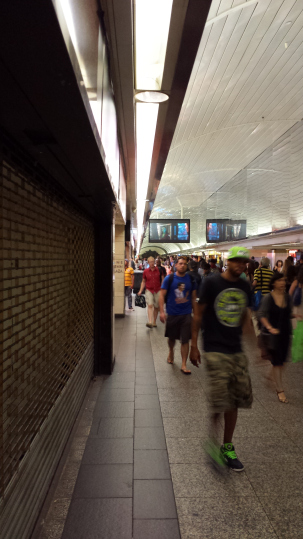
Penn Station LIRR Terminal
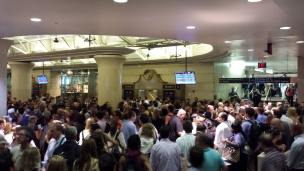
Penn Station NJT Terminal
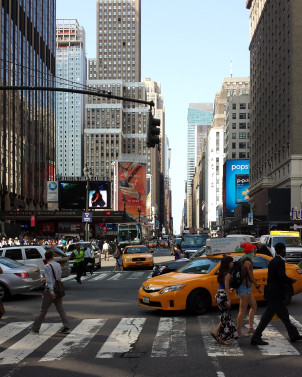
Penn Plaza and MSG (Left)
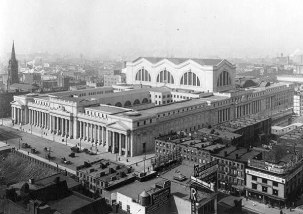
PHOTO CITED: Old Penn Station
Clearly, “one entered the city like a god. One scuttles in now like a rat.” - Vincent Scully
And Grand Central Terminal is actually owned by a man, Mr. Andrew Penson! Check this out:
In 2006, Midtown Trackage Ventures, which included two institutional investors that Andrew Penson would not identify, bought Grand Central and 75 miles of track to Poughkeepsie and 82 miles to Wassaic, in Dutchess County, from American Premier Underwriters; American Premier’s parent, American Financial Group had acquired the bankrupt Penn Central’s real estate… The Metropolitan Transportation Authority…pays $2.24 million in annual rent on a lease that expires Feb. 28, 2274.
The MTA actually pays a man millions of dollars a year in order to operate a hub for millions of people. And this is after the former railroad operating GCT sold air rights to build the Pan Am Building — now the MetLife Building, similar to Penn Plaza at Penn Station. Luckily, GCT remains, unlike Penn Station, because preservationists (including Jackie Kennedy) kept it from being entirely destroyed. But the MTA does not own GCT, nor does it own the buildings surrounding the Terminal City or the Helmsley Building, the original commercial space for New York Central.
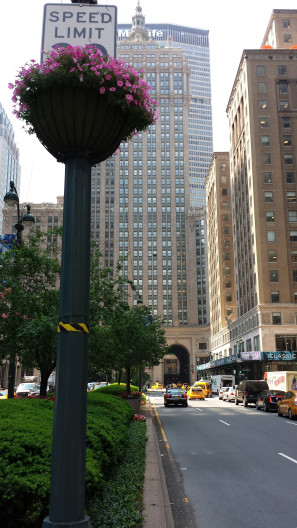
Helmsley Building, the former New York Central Headquarters Building…
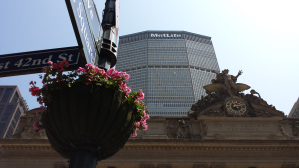
MetLife Building, the former Pan Am Building (for planes), next to the Chrysler (for cars), and GCT…
However, the MTA does own a lot of unused space in its stations, which is not used. Couldn’t the MTA be using that space more efficiently? The NYC subway system also has plenty of abandoned stations and abandoned passageways, but arguably none more elegant than City Hall. The original southern terminal for the original Interborough Rapid Transit Company (IRT) subway, City Hall opened in 1904 and has been closed since 1945 because it was too short and too close to the Brooklyn Bridge station.
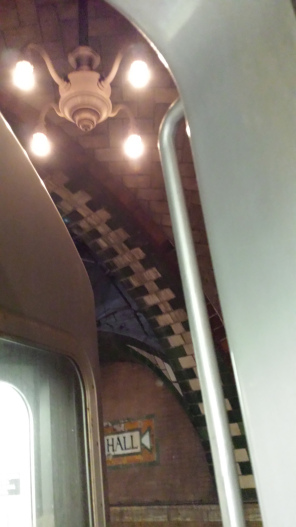
Oops, I kept riding the 6 past Brooklyn Bridge, but you can take an official tour
New York City’s former railroads built transportation hubs that tended to make relatively more financial sense. But these hubs are found in the rest of the U.S. as well. In fact, entire cities are around today because of transportation hubs. Atlanta was developed at the intersection of railroad lines, and so was Dallas, among so many other cities.
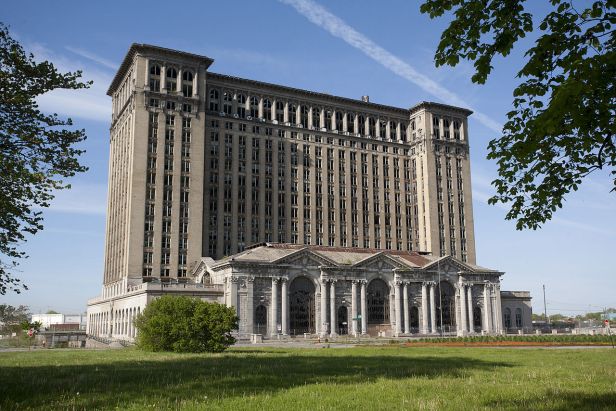
Abandoned hubs can be found in many cities in the U.S., such as Detroit’s Michigan Central Station and Buffalo’s Central Terminal. These huge buildings had plenty of commercial space. Now they sit abandoned in shrinking “microbergs”. Boston’s South Station used to have plenty of commercial space as well, but most of it has been destroyed. But hubs are not the only abandoned pieces of infrastructure in America. Many railroad lines were also simply destroyed, with homeowners buying up the land and actually selling the metal. Today, to rebuild these lines, we’d need billions of dollars.
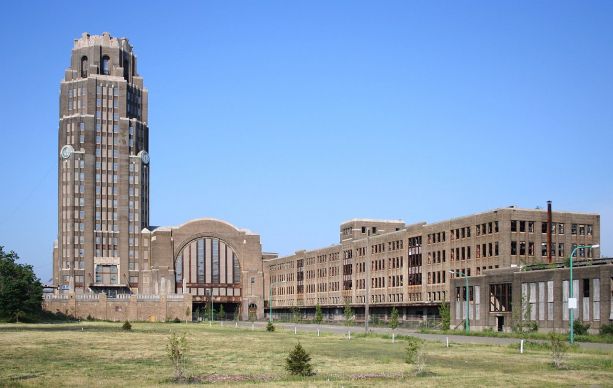
PHOTOS CITED: Buffalo Central Terminal (Above), Michigan Central Station (Below)
But there’s hope. Planners now understand the concept of transportation hubs again. San Francisco is building the Transbay Center with plenty of commercial space, and All Aboard Florida is a private company that is planning to create a high speed link in Florida while developing real estate assets around the line. Philadelphia’s Reading Terminal may be abandoned, but there’s been a market in the building. Europe also has plenty of hubs with commercial space, and Sao Paulo’s new World Cup stadium is next to a hub with a lot of agency-owned retail space.
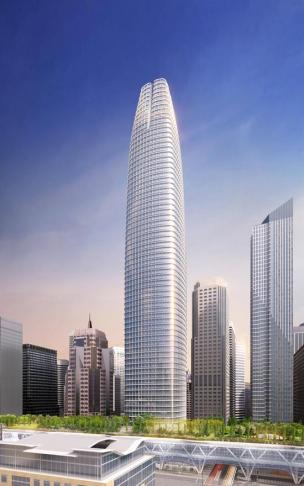
PHOTO CITED: Transbay Center in San Francisco
But what can New York City do?
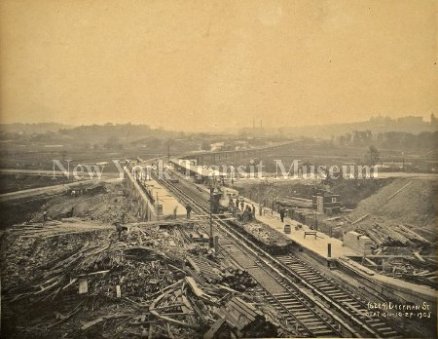
PHOTO CITED: NYC Subway Extension into Farmland (spurring T.O.D.)
NYC must take advantage of its empty spaces, and not just its underground spaces. It must get rid of zoning hassles that keep new housing on vacant lots from being built, thereby increasing the supply of housing and lowering the cost of living. It must also find out a way to bring incentives into public authorities, such as the MTA. Public-private partnerships (PPPs) and associated contracts are a great way to combine the efficiency, accountability, and transparency of the private sector with the regulations and anonymity needed to run public transportation. Franchised routes (that do not discriminate like the B110) may also be interesting to explore, so the city actually gets money by auctioning off routes. Informal transportation also should be encouraged and regulated, because there’s clearly a need for these routes. And of course, there’s a revolution coming to America’s cities with Uber and Lyft promising to get rid of more and more cars. This needs to be catalyzed and formalized. Maybe all of these routes can connect with subways at hubs, and they can pay to connect there - just as the Port Authority Bus Terminal charges bus companies to use their space.
But as NYC enters the future, it must remember its past, and the great railroads that built the city. Midtown Manhattan grew up (literally, up) around Grand Central’s Terminal City. The Second Avenue Subway is still being constructed — can we incorporate a lot of commercial space into the stations? The MTA promises that the new line will reduce congestion on Lexington Avenue, but induced demand also works for subways as much as it does for highways. A new lane on a road will fill up just as a new subway line will fill up. Nevertheless, hopefully, it’ll fill up with commercial space. And perhaps, the MTA can actually buy Grand Central Terminal…
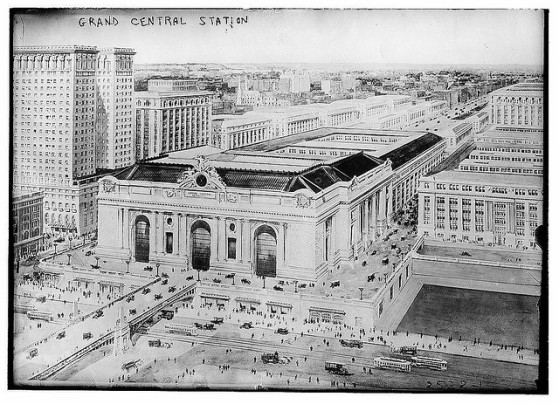
PHOTO CITED: Grand Central Terminal’s Terminal City
The MTA is not the only transportation agency in the region that needs to improve its transportation hubs. New Jersey Transit also needs to get its act together, which requires support from local politicians. In fact, NJT has been proposing housing on top of the Hoboken Yards in Hoboken, NJ, for years. However, local politicians dislike the idea because they don’t want more density and, quite simply, they don’t like change. Perhaps corruption also comes into play.
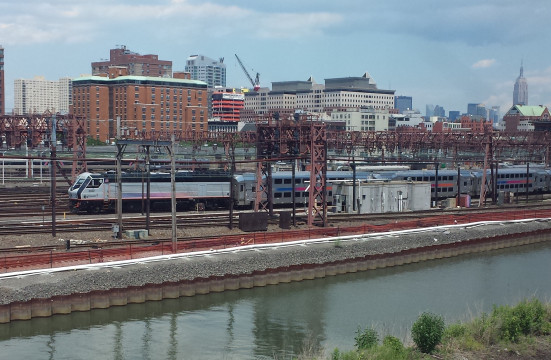
NJT Hoboken Yards (taken from Hudson-Bergen Light Rail)
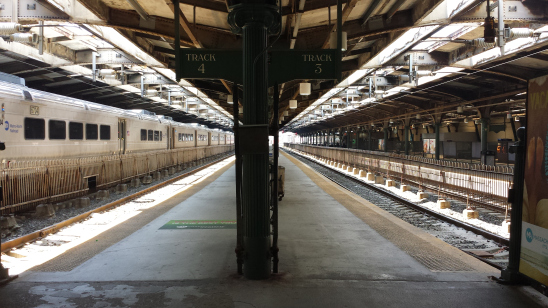
Imagine housing on top of the Hoboken Yards, connected directly to the region…
If one were to ride the NJT from Hoboken, the next stop would be Secaucus Junction, which connects all NJT routes in a massive hub. This relatively new station, however, is in the middle of a swamp, and there’s a small town and a lot of industry nearby. What about an office tower above the station? It’s only one stop from Newark, one stop from Hoboken, and one stop from Manhattan. In fact, there were plans to build towers there, but that was before the Great Recession of 2008.
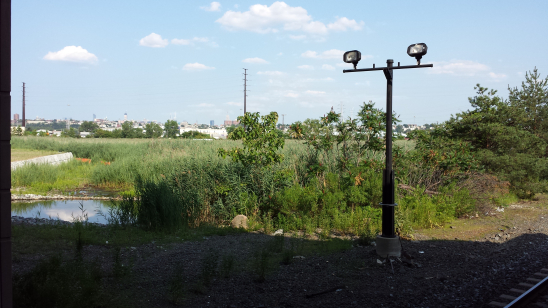
Swamps of Secaucus (alongside station)
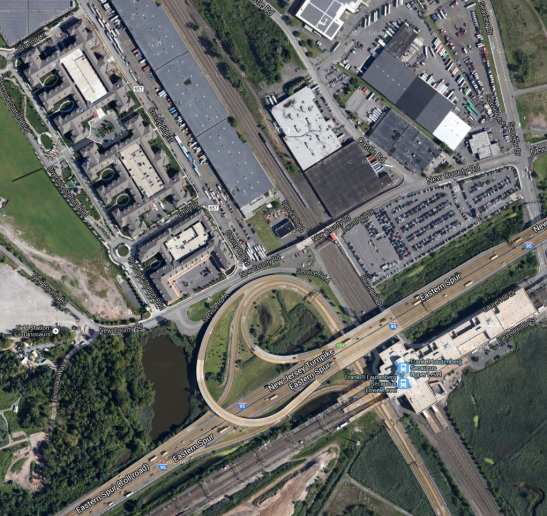
PHOTO CITED: Secaucus Junction with new housing, swamps, parking lots…
Then there’s Newark, a city with a lot of poor governance and corruption, and with a history of racial tension, de-industrialization, poverty, suburbanization, white flight, and shrinkage. The land right next to Newark Penn Station is completely full with parking lots, instead of with transit-oriented development and, fine, maybe some underground parking lots. This station has connections with NJT routes that service almost all of New Jersey. It also has the PATH, which goes to Manhattan, and the Newark light rail, not to mention Amtrak’s Northeast Corridor. Yet the sidewalks are relatively empty, and pedestrian overpasses connect buildings with each other so that almost no one needs to go outside.
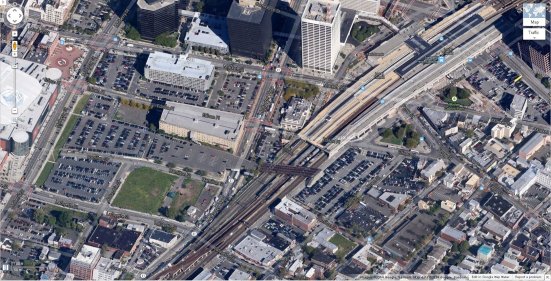
PHOTO CITED: Newark, NJ Parking Madness
The Prudential Center and some parking lots are actually on the site of a former rail yard, and only the abandoned rail overpass can still be seen hanging above the tracks to the south of Newark Penn Station.
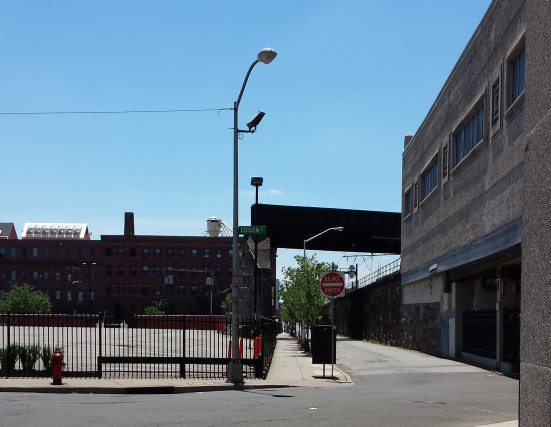
An abandoned rail overpass flying into a parking lot…
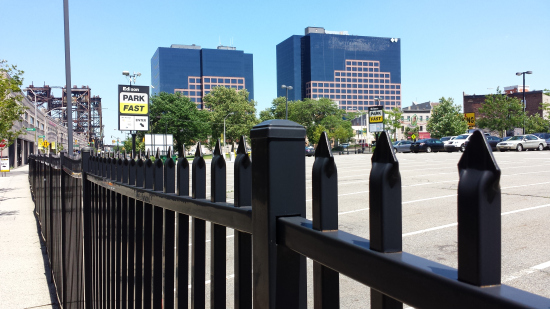
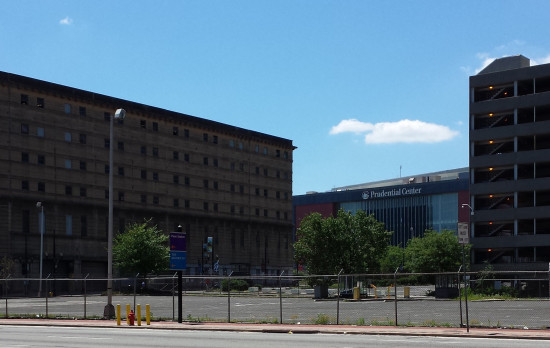
Imagine if T.O.D. was built on top of former rail yards instead of parking lots…
In the end, transportation hubs with additional “creative” space don’t just increase revenue for transportation agencies. If there’s office space, retail space, and affordable housing there as well, then it also impacts countless other social, economic, and political indicators. And how about a rooftop farm? You could leave work and pick up some food grown above your station! Or, maybe some solar panels that help to power trains below? And some community space for local meetings? Plus, local artwork to help with place-making efforts? These hubs can help to bridge the gap between communities by offering enhanced physical mobility, but also enhanced socioeconomic mobility as centers of transit-oriented employment and housing. The social, economic, political, environmental, and physical opportunities are endless for New York and America!
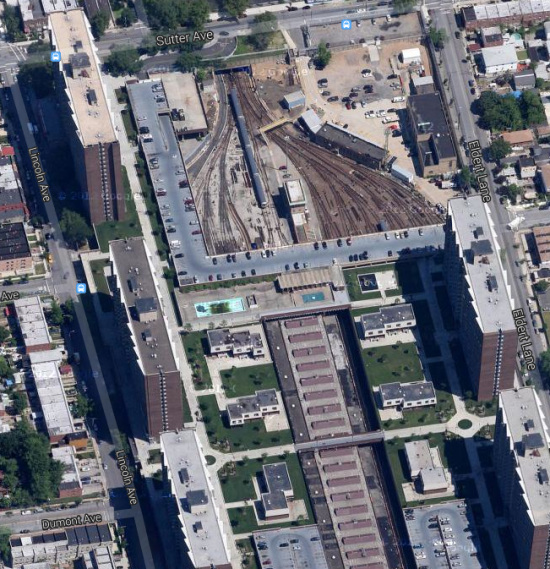
PHOTO CITED: IND Fulton Street Rail Yard (+Robert Moses’ housing aboveground)!
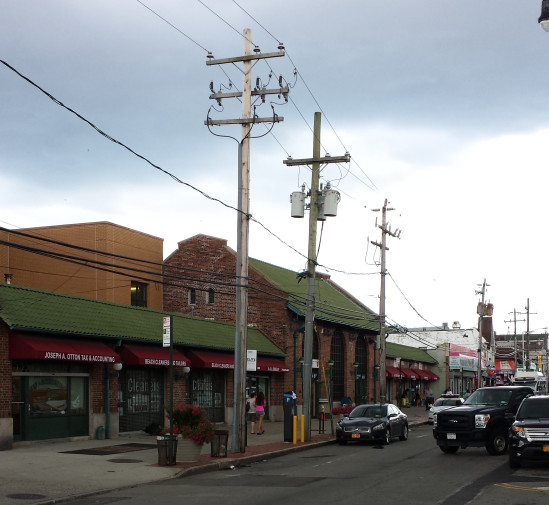
Rockaway Park (A/S) Station, and quite a few stores owned by the MTA…
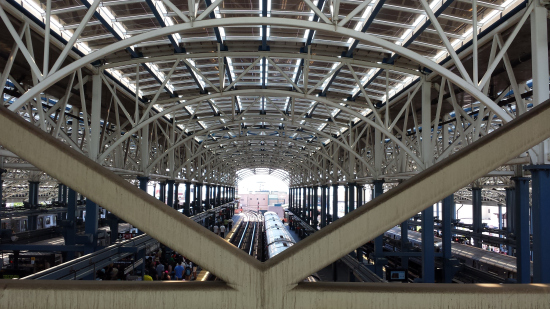
Solar panels above Coney Island B Division hub…
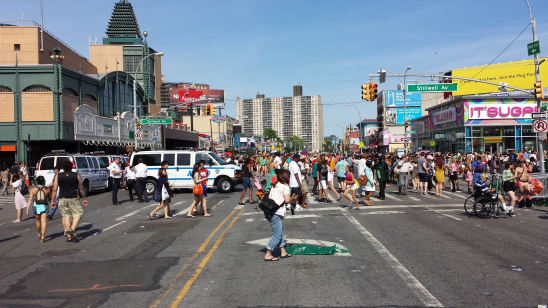
Ground floor retail at Coney Island B Division hub…
(It was free to enter NYCT on Mermaid Day, which was a terrible way to get revenue…)
To clarify, I don’t dislike the MTA. I love the MTA. I grew up riding the subway. And despite concerns highlighted in this post, which should be addressed, it’s nonetheless quite important to note all of the GREAT things that the MTA has been doing. So, let me conclude by borrowing from my previous post:
There’s no doubt that the MTA has improved the subway quite a lot in the past few decades. It’s cleaner, it’s safer, it’s brighter, it’s (more) punctual, it’s easier to understand, and it’s being expanded. Many, many, many stations have been renovated, and infrastructure is constantly being repaired throughout the network, especially now with FASTRACK. Moreover, the MetroCard has been around for quite a while now, Select Bus Service is a great program (with express service, pre-board payment, and *sometimes* bus lanes), and lastly, MTA Bus Time rocks. There’s also Wi-Fi, interactive help points, artwork, and placemaking in select stations, and the MTA is also upgrading infrastructure to prevent future flooding… So many people have dedicated their professional lives to the cause, and they’ve definitely accomplished a lot. The 2nd Avenue Subway is coming relatively soon, and so is the East Side LIRR Access project, the 7 Line Extension, Calatrava’s PATH hub, and the Fulton Center hub, which is definitely designed well except for the area above it (i.e., the MTA is definitely NOT taking advantage of real estate potential and the millions it could be receiving in additional revenue). These are some of the better publicized projects, but so much work is carried out every day, keeping the city running… These are just a few of the countless things that the MTA has been doing to improve our massive (and old) system, which is undoubtedly the best in the U.S.
They’ve come a long way, but they can still improve by realizing that transportation hubs are not just transportation hubs. They are transformation hubs.
Rayn Riel is a student at Tufts University studying international urban development, his self-crafted major. Interested in transportation, he is the founder of Tufts’ only undergraduate urban development student organization and was an intern at the NYC Department of City Planning (DCP) in Brooklyn in order to work on transportation accessibility and mobility in East New York. Now an intern in the DCP Transportation Division, Rayn is a writer on PlanYourCity, he has had planning work and research experience in the Americas, Asia, Africa, and Europe, as well as in the United States, and of course, NYC.
(Photos are taken by Rayn unless otherwise “PHOTO CITED” with links and descriptions)





#mediaviewer/File:Penn_Station3.jpg)


//Post has been updated!
LikeLike
Very good post! We are linking to this particularly great
post on our site. Keep up the good writing.
LikeLike
Thanks so much!
LikeLike
http://www.nytimes.com/2015/12/31/nyregion/longing-for-the-old-penn-station-in-the-end-it-wasnt-so-great.html?_r=0
LikeLike
LikeLike